Transvaginal Mesh Lawsuit

Key Takeaways

  • Women who received transvaginal mesh implants between 1998 and 2019 may still qualify for lawsuits in 2025, as the discovery rule in most states starts the statute of limitations clock when complications are discovered – not when surgery occurred.

  • Transvaginal mesh settlement amounts typically range from $60,000 to over $400,000 depending on injury severity, with manufacturers including Johnson & Johnson and Boston Scientific having paid over $8 billion in total settlements and verdicts.

  • Mesh erosion affects 5-19% of recipients, chronic pain impacts up to 30%, and sexual dysfunction occurs in 20-40% of women – complications that may qualify you for legal action even if symptoms appeared years after your transvaginal mesh surgery.

What Is a Transvaginal Mesh Lawsuit?

Question: What is a transvaginal mesh lawsuit?

Answer: A transvaginal mesh lawsuit is a legal claim filed by women who suffered complications from synthetic polypropylene mesh implants used to treat pelvic organ prolapse and stress urinary incontinence. Manufacturers have paid over $8 billion in settlements and verdicts to more than 100,000 women injured by these devices, with individual state court cases continuing to accept new claims in 2025.

On this page, we’ll answer this question in further depth, common complications and injuries from transvaginal mesh, and much more.

Transvaginal Mesh Lawsuit; How Can A Transvaginal Mesh Attorney from TruLaw Help You; Background of Vaginal Mesh Use and Controversy; Complications and Risks Associated with Vaginal Mesh; Common Adverse Effects and Injuries; Long-term Consequences of Vaginal Mesh Implantation; Regulatory Actions and Public Awareness; Eligibility Criteria to File a Transvaginal Mesh Lawsuit; Types of Damages Caused by Surgical Mesh Devices; Why Are Women Filing Vaginal Mesh Claims; The Legal Basis for Transvaginal Mesh Claims; Serious Complications and Injuries Caused by Transvaginal Mesh; FDA Actions and Regulatory History of Transvaginal Mesh; Eligibility Requirements for Filing a Transvaginal Mesh Lawsuit; The Legal Process of Filing a Transvaginal Mesh Claim; Filing the Complaint and Discovery Phase; Transvaginal Mesh Settlement Amounts and Compensation Factors; Manufacturers Named in Transvaginal Mesh Litigation; How Can A Transvaginal Mesh Attorney from TruLaw Help You; Learning About Transvaginal Mesh and Why Lawsuits Exist; What Is Transvaginal Mesh; Why Manufacturers Face Legal Accountability; Common Complications and Injuries From Transvaginal Mesh; Who Qualifies for a Transvaginal Mesh Lawsuit in 2025; Recognizing Settlement Amounts and Compensation; Legal Claims in Transvaginal Mesh Cases (2); Steps to Take if You Have Mesh Complications; How Can A Transvaginal Mesh Attorney from TruLaw Help You; Meet the Lead Online Gambling Addiction Attorney at TruLaw; How much does hiring a Transvaginal Mesh lawyer from TruLaw cost

Overview of Transvaginal Mesh Litigation in 2025

While major federal multidistrict litigations concluded in 2022, transvaginal mesh litigation remains active across state courts nationwide.

In an October 2025 vaginal mesh lawsuit update, nearly 30 women received settlements for their claims in New Jersey, where an additional 38 lawsuits have entered the fact-gathering stage with settlement discussions or trial preparations underway.

Lawsuits allege manufacturers including Johnson & Johnson/Ethicon, Boston Scientific, C.R. Bard, American Medical Systems, and Coloplast knew about high complication rates (including mesh erosion affecting 5-19% of recipients, chronic pain in up to 30%, and sexual dysfunction in 20-40%) but continued aggressive marketing without adequate warnings.

Internal company documents revealed executives discussed complication risks as early as 2005-2009 but prioritized profits over patient safety, leading to the FDA’s 2019 ban on mesh for pelvic organ prolapse after determining risks outweighed benefits.

Settlement amounts in transvaginal mesh cases have ranged from $40,000 to $450,000 depending on injury severity, with jury verdicts reaching $80 million, $57.1 million, and $41 million against Johnson & Johnson in recent years.

A 2024 University of Sheffield study confirmed that polypropylene mesh begins degrading within 60 days of pelvic implantation, with fiber concentrations in surrounding tissue increasing over 10 times by 180 days – validating what injured women reported for over a decade.

If you or a loved one experienced mesh erosion, chronic pain, organ perforation, or sexual dysfunction after transvaginal mesh implantation, you may be eligible to seek compensation.

Contact TruLaw using the chat on this page to receive an instant case evaluation that can help you determine if you qualify to file a transvaginal mesh lawsuit today.

Transvaginal Mesh Lawsuit Updates Timeline

October 6th, 2025: Sparc Sling Mesh Lawsuit Filed in Illinois Federal Court

A woman from Tolono has filed a lawsuit in the U.S. District Court for the Central District of Illinois, alleging severe injuries from the Sparc Sling System, a pelvic mesh device manufactured by American Medical Systems and Endo Pharmaceuticals.

According to the complaint, the plaintiff received the implant in July 2020 and later required corrective surgery in January 2024 after experiencing mesh erosion and related complications.

The lawsuit asserts claims of negligence, strict liability for design and manufacturing defects, failure to warn, and fraudulent concealment.

It argues that the device’s polypropylene and collagen materials are biologically incompatible with human tissue, leading to chronic inflammation, pain, and other injuries.

The filing also alleges that the companies withheld known safety risks and marketed the Sparc Sling as safe and effective despite ongoing regulatory concerns, including the FDA’s 2011 Safety Communication warning about serious risks tied to transvaginal mesh implants.

July 17th, 2025: POP Mesh Lawsuits Outpace SUI Claims in Severity as Legal and Medical Risks Diverge

New legal patterns and clinical research are drawing a clearer line between pelvic mesh used for Pelvic Organ Prolapse (POP) repair and Stress Urinary Incontinence (SUI) treatment—revealing stark contrasts in complication rates, regulatory scrutiny, and lawsuit outcomes.

POP Mesh Carries Elevated Risk of Serious Harm

POP mesh, particularly when implanted transvaginally, has been linked to significantly more severe complications than its SUI counterparts, with recent analyses showing that 27% to 40% of POP patients experience mesh-related issues and up to 13% require revision surgery within the first year.

Injuries tied to POP mesh often involve long-term damage such as vaginal erosion, pelvic infections, organ perforation, and nerve pain—conditions that frequently necessitate multiple surgeries and result in permanent impairment.

FDA Intervention Heavier on POP Products

Although the FDA issued general mesh safety notices beginning in 2008, it wasn’t until 2019 that it formally reclassified transvaginal POP mesh as a high-risk Class III device and ordered its removal from the U.S. market.

By contrast, SUI mesh slings avoided such action and remain FDA-cleared as moderate-risk Class II devices, despite being named in a majority of filed claims during the peak of litigation.

Litigation Trends Favor POP Plaintiffs

Of the more than 73,000 pelvic mesh lawsuits filed between 2000 and 2014, about 60% involved SUI products, but it’s the POP-related claims that have typically resulted in higher settlements and jury awards due to the severity and permanence of injuries.

Many POP mesh manufacturers began withdrawing their products prior to the FDA’s full regulatory crackdown, likely to avoid the burdens of premarket approval and mounting legal exposure.

As the legal landscape continues to unfold, the distinction between POP and SUI mesh is proving crucial—not only for patients seeking justice but also for future policy decisions regarding device safety and oversight.

July 3rd, 2025: Irish Physiotherapist Renews Call to Ban Transvaginal Mesh Amid Global Safety Concerns

Aoife Ní Eochaidh, a Chartered Physiotherapist from West Clare, is urging Irish lawmakers to implement a nationwide ban on transvaginal mesh (TVM) implants, citing serious and often permanent health risks faced by women worldwide.

Speaking at a recent delegation briefing at Leinster House, Ní Eochaidh warned that Irish patients remain vulnerable to complications such as chronic pelvic pain, mesh erosion, and irreversible damage unless stronger regulatory action is taken.

TVM implants, used to treat pelvic organ prolapse and stress urinary incontinence, have come under international fire due to widespread reports of debilitating side effects.

Ní Eochaidh stressed that without swift intervention, Ireland risks repeating the health crises seen in other countries where patients suffered years of undiagnosed or misattributed complications.

Her call joins a broader international push to eliminate the use of TVM devices, following regulatory actions in countries such as the United States, United Kingdom, and Australia, where agencies have suspended or withdrawn mesh products from the market.

Despite growing concern and legal action abroad, Irish regulators have yet to issue a formal response to the latest plea for reform.

With increasing pressure from medical professionals and patient advocates, Ireland may soon face renewed debate over whether transvaginal mesh still belongs in modern pelvic floor treatment.

July 2nd, 2025: Long-Term Harm from Pelvic Mesh Implants Continues to Drive Litigation

Pelvic mesh litigation remains active nationwide as patients continue to come forward with reports of debilitating injuries years after implantation, underscoring the lasting impact of transvaginal mesh (TVM) devices.

A recent feature by Drugwatch spotlighted the case of Donna Miser, who endured years of unresolved pain and distress following a mesh implant used to treat urinary incontinence.

Despite repeated complaints of pelvic pain, bleeding, and painful intercourse, Miser’s symptoms were initially dismissed—until a specialist found that the mesh had eroded through her urethra, bladder, and vaginal wall.

She has since undergone multiple complex removal surgeries and continues to suffer long-term complications, including nerve damage and persistent pain.

Although the FDA banned the sale of transvaginal mesh for pelvic organ prolapse in 2019, mesh slings for stress urinary incontinence remain on the market—and many women implanted before the ban continue to experience serious complications.

Reports of mesh erosion, infection, chronic pelvic pain, and sexual dysfunction have fueled over 100,000 lawsuits against major manufacturers, including Johnson & Johnson’s Ethicon unit, Boston Scientific, and C.R. Bard.

Industry-wide settlements have reached billions of dollars, and individual jury awards have climbed into the millions for victims with permanent injuries.

While the majority of federal claims were consolidated in multidistrict litigation, new lawsuits continue to be filed as more patients connect their injuries to these once widely used implants.

Donna Miser’s story is just one among thousands and is expected to draw renewed legal scrutiny and public awareness to the long-term risks still associated with pelvic mesh devices.

June 24th, 2025: Study Links Unique Bacteria on Mesh Implants to Chronic Pain and Complications in SUI Patients

Midurethral mesh slings, commonly used to treat stress urinary incontinence (SUI), have come under increasing legal and medical scrutiny due to serious complications reported by thousands of patients.

Complaints such as chronic pain, infections, mesh erosion, and organ perforation have led to growing concerns about the safety and design of these surgical implants.

New research published in the Applied and Environmental Microbiology journal in June 2025 offers fresh insight into the potential biological causes behind these issues.

The study found that the bacteria colonizing the mesh slings differ significantly from the typical microbial populations found in nearby vaginal, urinary, and skin environments.

In particular, mesh samples from patients with chronic pain showed greater bacterial diversity, including the presence of species such as Enterococcus—suggesting a connection between mesh-specific bacteria and inflammatory complications.

These findings support claims made in numerous lawsuits against mesh manufacturers.

Plaintiffs allege that the devices are defectively designed in a way that fosters harmful bacterial colonization and that companies failed to adequately warn patients or conduct sufficient premarket testing to uncover long-term health risks.

Legal actions seek compensation for a range of damages, including medical costs, lost wages, pain and suffering, and diminished quality of life.

As more scientific evidence emerges, the role of microbial colonization is becoming a key element in both understanding mesh complications and holding manufacturers accountable.

June 6th, 2025: Study Finds TVM Particles May Trigger Autoimmune Response, Raising New Legal Questions

A new study published in Nature Reviews Urology has found that microscopic particles from transvaginal mesh (TVM) implants may trigger autoimmune responses, even after the device has been surgically removed.

The research, led by Dr. Nicholas Farr, links residual polypropylene particles—commonly used in mesh products—to Autoimmune/Inflammatory Syndrome Induced by Adjuvants (ASIA).

According to the study, these particles can remain in surrounding tissue and provoke ongoing immune system activity, potentially worsening symptoms long after mesh removal.

These findings may impact current and future transvaginal mesh lawsuits by challenging earlier conclusions that dismissed any association between mesh implants and autoimmune disease.

In particular, the new evidence calls into question a 2017 study published in the American Journal of Obstetrics and Gynecology, which found no systemic health risks related to mesh use.

May 26th, 2025: FDA Proposes Reclassification of Transvaginal Mesh for POP as High-Risk

The U.S. Food and Drug Administration (FDA) announced a proposal to reclassify transvaginal mesh used for treating pelvic organ prolapse (POP) as a high-risk medical device.

If the proposal is finalized, manufacturers will be required to provide comprehensive data on the product’s safety and effectiveness before it can be marketed.

In addition to reclassifying the mesh itself, the FDA is also seeking to elevate the regulatory status of the surgical instruments used to implant and secure the mesh—from low-risk to moderate-risk—reflecting the growing concern over potential complications.

This move follows more than a decade of increasing scrutiny.

The FDA first flagged potential safety issues with vaginal mesh products in 2008 and later issued formal warnings and postmarket surveillance requirements in 2011 and 2012.

The proposed changes are now open for public comment for a 90-day period.

It’s important to note that these reclassifications apply only to mesh intended for vaginal POP repair and related tools; devices used for hernia repair, stress urinary incontinence, or abdominal POP procedures are not included in the proposal.

March 1st, 2025: Ongoing Developments in Transvaginal Mesh Litigation

Transvaginal mesh (TVM) implants were introduced in the late 1990s as a solution for pelvic organ prolapse (POP) and stress urinary incontinence (SUI).

Intended to reinforce weakened pelvic tissues, these devices quickly gained popularity—but over time, they became linked to serious and often debilitating complications, including chronic pelvic pain, organ perforation, bleeding, and mesh erosion.

These complications have triggered a wave of litigation against mesh manufacturers, as thousands of affected women have sought accountability and compensation.

Resolution of Federal MDLs: A Major Milestone

To manage the sheer volume of cases, many lawsuits were consolidated into multidistrict litigations (MDLs), streamlining the legal process while enabling more efficient case resolution.

The final federal MDL for transvaginal mesh concluded in November 2022, with numerous claims settled during the proceedings.

However, the end of the MDL does not prevent individuals from filing personal lawsuits.

Women who have experienced mesh-related injuries can still bring individual claims tailored to their specific circumstances.

Why Individual Claims Still Matter

Pursuing a separate lawsuit outside the MDL framework offers several potential advantages:

  • Customized Legal Strategy: Each case can be evaluated independently, allowing for personalized legal approaches and negotiation tactics.
  • Higher Compensation Potential: Individual cases are not bound by MDL settlement averages, which may lead to greater financial recovery based on the severity of the injuries.
  • Greater Plaintiff Control: Those pursuing individual claims often have more input over critical decisions, such as trial participation and settlement acceptance.

The Legal Landscape in 2025

Even with many high-profile settlements behind them, manufacturers continue to face litigation.

For example, Johnson & Johnson agreed to a $120 million settlement in January 2016 to resolve around 3,000 claims.

Yet, many lawsuits remain active, with both federal and state courts still handling unresolved cases.

Recent Global Developments

In August 2024, 140 women in the UK received compensation for injuries linked to vaginal mesh implants.

The claims targeted major manufacturers, including Johnson & Johnson, C.R. Bard, and Boston Scientific, and involved complications such as persistent pain, organ perforation, and mesh migration.

Women considering filing a lawsuit related to transvaginal mesh injuries should keep the following in mind:

  • Statute of Limitations: Deadlines for filing vary by state and country. Prompt legal consultation is crucial to avoid missing these time-sensitive windows.
  • Medical Documentation: Clear medical records linking the mesh implant to resulting health problems will strengthen a case.
  • Specialized Legal Support: Working with attorneys experienced in mesh litigation can significantly improve a claimant’s chance of success.

Despite the closure of the federal MDL, transvaginal mesh litigation remains active and evolving.

Women who continue to suffer from complications should explore their legal options, especially as new studies and settlements highlight the ongoing impact of these devices.

Let me know if you’d like this turned into a landing page, newsletter piece, or formatted infographic summary.

February 3rd, 2025: Oregon Jury Delivers Defense Verdict in Pelvic Mesh Malpractice Case

An Oregon jury has ruled in favor of the defense in a medical malpractice lawsuit involving the implantation of a pelvic mesh device.

The plaintiff accused urologist Dr. Michael Lemmers and the Legacy Health hospital system of negligence, alleging they failed to obtain proper informed consent before implanting the Boston Scientific “Uphold Lite” mesh device during a 2019 procedure to treat pelvic organ prolapse.

The case focused on claims that the patient was not adequately informed of the potential risks associated with the device.

Informed consent cases, particularly in the context of complex medical procedures, are notoriously difficult to win, and the jury’s decision reflects that legal reality.

New Mesh Lawsuits Continue Post-MDL Closure

Despite the formal closure of the vaginal mesh multidistrict litigation (MDL), new lawsuits are still being filed in state courts across the United States.

As of late 2024, legal efforts to hold mesh manufacturers accountable remain active, though outcomes have varied.

Internationally, the issue also persists.

In August 2024, more than 100 women in England received financial settlements for serious complications resulting from mesh implants.

Reported injuries included persistent pain, perforation of the bladder and bowel, bleeding, and mesh erosion through the vaginal wall.

While exact compensation amounts were not made public, the total reached into the millions of pounds.

Study Links Mesh Material to Rapid Degradation

Adding to the growing scrutiny, a recent study from the University of Sheffield in the UK has raised new concerns about the design and material quality of vaginal and pelvic mesh implants.

Researchers found that the plastic commonly used in these devices begins to degrade within just 60 days of implantation.

The study concluded that the material—widely believed to be biocompatible—may actually be prone to early breakdown, leading to inflammation, tissue damage, and long-term health complications.

These findings lend further support to ongoing claims that many mesh implants were fundamentally flawed in both design and manufacturing.

November 1st, 2024: Study Exposes Rapid Degradation of Polypropylene in Vaginal Mesh Implants

Groundbreaking research from the University of Sheffield has revealed significant flaws in the polypropylene (PP) material commonly used in transvaginal mesh (TVM) implants.

The study found that PP begins to degrade within just 60 days of being implanted, with further structural breakdown evident by 180 days.

This degradation, marked by oxidation and the buildup of polypropylene particles in nearby tissues, challenges long-held beliefs about the material’s chemical stability.

As the mesh deteriorates, it causes a growing disconnect between the implant and surrounding tissue, which can trigger inflammation, tissue damage, and chronic pain.

These findings call into question the overall biocompatibility of PP-based mesh devices, which have already been linked to serious complications such as pelvic pain, infections, and urinary problems.

The research adds scientific weight to the ongoing debate about the safety of these implants.

In response to mounting concerns, the NHS placed strict limitations on the use of TVM in 2018, allowing procedures only under a high-surveillance protocol.

The latest study further supports the claims of many women who have filed lawsuits after suffering long-term health issues from mesh implants.

In England alone, more than 100 cases have recently been resolved through settlements.

Advocates are now calling for urgent reforms and the development of safer, more sustainable materials to prevent further harm to patients undergoing treatment for pelvic organ prolapse and stress urinary incontinence.

October 20th, 2024: New Study Reveals Polypropylene Mesh Degrades Quickly, Raising Alarms Over Vaginal Implant Safety

Recent research has revealed that polypropylene—the primary material used in transvaginal mesh (TVM) implants—begins to break down within just 60 days of being implanted in the pelvic region.

This finding intensifies ongoing concerns about the long-term safety of TVM devices, which have been used to treat pelvic organ prolapse (POP) and stress urinary incontinence (SUI) but are linked to a range of serious complications.

Conducted by scientists at the University of Sheffield in the UK, the study used a sheep model, chosen for its anatomical similarities to the human pelvis.

Researchers discovered that polypropylene mesh became stiffer over time, exhibited signs of oxidation, and shed microscopic particles that were absorbed into the surrounding tissue—concentrations of which increased the longer the mesh remained implanted.

These results have sparked renewed calls from patient advocates and medical professionals for urgent reform.

Campaigners argue that the material was not sufficiently evaluated for pelvic use before being introduced into clinical practice.

Sheila MacNeil, an emeritus professor in biomaterials and tissue engineering, stressed the urgent need to develop safer alternatives to prevent further patient harm.

The study’s lead author, Dr. Nicholas Farr, expressed hope that the findings will encourage manufacturers to innovate and improve implant safety.

Meanwhile, Kath Sansom, founder of the patient advocacy group Sling The Mesh, cited the study as further proof of the dangers of polypropylene mesh and called for immediate changes in how pelvic conditions are treated.

This research follows a group settlement in which over 100 women in England received compensation after experiencing debilitating side effects from TVM implants.

Reported complications include chronic pelvic pain, infections, urinary difficulties, and the need for multiple revision surgeries.

The growing body of evidence has prompted medical and legal communities alike to push for stricter oversight, improved patient education, and the exploration of non-mesh alternatives for managing POP and SUI.

October 4th, 2024: Major Breakthrough in Hernia Mesh Lawsuit as Bard Reaches Settlement

The Bard Hernia Mesh multidistrict litigation (MDL) has taken a significant step forward, with a major settlement bringing relief to thousands of affected individuals.

C.R. Bard has agreed to resolve the vast majority of claims filed in both the federal MDL and Rhode Island state court, settling more than 30,000 cases related to injuries caused by its hernia mesh products.

This marks a major conclusion to a lengthy and challenging legal battle that has been ongoing since the MDL was established in August 2018.

The litigation experienced delays due to the COVID-19 pandemic and a series of complex trials across multiple jurisdictions.

A turning point came in early 2024, when the MDL judge paused a planned bellwether trial and ordered the parties into mediation.

Following months of negotiations, the parties have now reached an agreement to compensate victims who experienced complications from Bard’s allegedly defective hernia mesh devices.

The settlement represents a substantial victory for plaintiffs and moves the litigation closer to closure for thousands of injured patients.

June 20th, 2024: Appeals Court Upholds $2.5 Million Verdict in Vaginal Mesh Case Against Coloplast

The United States Court of Appeals for the Eleventh Circuit has affirmed a lower court ruling in the case of Virginia Redding v. Coloplast Corporation, a significant decision in the ongoing litigation over vaginal mesh implants.

The appeal focused on whether Redding’s product liability claim was filed within the statute of limitations under Florida law.

Redding filed her lawsuit on September 18, 2014, asserting that vaginal mesh devices manufactured by Coloplast were defectively designed and caused her serious injuries.

Coloplast contested the suit, arguing it was time-barred due to Florida’s four-year statute of limitations for product liability claims.

The company claimed Redding began experiencing symptoms more than four years before initiating legal action.

However, the appellate court agreed with the lower court’s finding that Redding was not aware—and had no reasonable way of knowing—before September 18, 2010, that her injuries were specifically linked to the mesh implants.

As a result, the court ruled that her claim was timely.

The jury in the original trial awarded Redding $2.5 million in damages.

Coloplast’s post-trial attempt to overturn the verdict through a renewed motion for judgment as a matter of law was also denied by the district court.

This decision underscores the legal challenges involved in product liability cases, particularly around the discovery of injury and the timing of legal claims.

It also marks another notable outcome in the broader landscape of vaginal mesh litigation.

May 1st, 2024: Philadelphia Jury Awards $20 Million in Vaginal Mesh Lawsuit Against Johnson & Johnson Subsidiary

A Philadelphia jury has awarded $20 million in damages to a woman from Cinnaminson, New Jersey, who suffered severe complications from a vaginal mesh implant manufactured by Ethicon, a division of Johnson & Johnson.

The verdict, reached in late April in the Philadelphia Court of Common Pleas, concluded a three-week trial centered on the safety and performance of the TVT-Secur transvaginal mesh device.

The woman had the mesh implanted to treat stress urinary incontinence, but within two months, the device began to erode.

Despite undergoing three separate surgeries in an attempt to remove the mesh, remnants of the device remain in her body, resulting in chronic pain and ongoing urinary issues.

Jurors determined that the device failed to perform as intended and that Ethicon failed to adequately warn healthcare providers and patients about the potential risks.

The jury awarded $2.5 million to cover medical expenses and other non-economic damages.

Additionally, $17.5 million in punitive damages was granted, signaling the jury’s conclusion that Ethicon’s conduct was grossly negligent.

The TVT-Secur device, which was used to address pelvic organ prolapse and urinary incontinence, has since been recalled. However, many patients who received this and other similar mesh products continue to face serious health complications.

This case adds to a growing list of high-value verdicts against Ethicon and Johnson & Johnson over their transvaginal mesh devices, which have been the subject of ongoing litigation due to their link to painful and often irreversible injuries.

April 11th, 2024: FDA Confirms SUI Mini-Slings Are as Safe and Effective as Traditional Mid-Urethral Slings

The U.S. Food and Drug Administration (FDA) has concluded its review of final reports from the mandated 522 postmarket surveillance studies on surgical mesh mini-slings used to treat stress urinary incontinence (SUI).

The findings indicate that SUI mini-slings perform as effectively as traditional mid-urethral slings over a 36-month period.

These studies revealed comparable rates and types of adverse events and re-surgery between mini-slings and traditional slings.

As part of its comprehensive evaluation, the FDA also conducted a systematic review of 30 randomized controlled trials published between 2013 and 2023.

This literature review further confirmed that mini-slings offer similar safety and efficacy outcomes when compared to conventional mid-urethral slings.

Surgical mesh slings remain a common treatment for SUI, and the FDA had previously required manufacturers to conduct long-term follow-up research specifically for mini-slings to assess their safety profile.

The newly released data reinforces confidence in the use of mini-slings as a viable option for managing SUI.

The FDA has stated it will continue to monitor these devices to ensure ongoing patient safety and optimal treatment outcomes.

March 12th, 2024: Vaginal Mesh Lawsuits Continue as Women Face Ongoing Health Struggles

The legal fight over vaginal mesh implants remains active, with many women still suffering from severe and lasting complications despite widespread awareness of the risks and a surge of lawsuits against manufacturers.

Originally intended to treat urinary incontinence and pelvic organ prolapse, transvaginal mesh implants have instead caused significant harm for countless women worldwide.

Commonly reported issues include chronic pain, mesh erosion into surrounding tissue, and worsening incontinence—often more severe than the original condition.

These complications frequently require multiple revision surgeries, yet complete relief is often out of reach.

Once implanted, the mesh is difficult to remove, and many patients are left dealing with persistent symptoms and long-term medical challenges.

The scale of harm has led to extensive litigation and large financial settlements.

Both healthcare providers and manufacturers now face mounting scrutiny over their role in promoting and utilizing these implants without fully disclosing the potential dangers.

Many women have successfully pursued legal action, bringing attention to the importance of informed consent and the need to consider non-surgical alternatives before proceeding with mesh procedures.

Still, too many patients continue to endure debilitating side effects, with little warning about the possible outcomes.

For those affected, the consequences are far-reaching.

Chronic pain, urinary issues, and the emotional burden of these conditions can significantly diminish quality of life, impacting everything from daily routines to long-term physical and mental well-being.

November 14th, 2023: Vaginal Mesh Lawsuit Continues as UK Settlement Highlights Ongoing Harm

The legal battle over vaginal mesh implants remains active, with recent developments underscoring the serious complications many patients have faced.

In the United Kingdom, a woman was awarded a £1 million settlement after enduring chronic pain and persistent health problems linked to a mesh implant procedure.

Vaginal mesh devices, commonly used to address urinary incontinence and pelvic organ prolapse, have been associated with a range of adverse effects.

Patients frequently report long-term pain, mesh erosion, and the recurrence of symptoms the implants were intended to resolve.

In numerous cases, surgeries were performed prematurely or without fully exploring less invasive alternatives, resulting in preventable harm.

These outcomes have prompted a wave of lawsuits, as individuals seek accountability and compensation for the physical, emotional, and financial toll they’ve endured.

For those affected by unnecessary or mishandled mesh surgeries, legal options may be available.

Compensation can help cover medical expenses, future care, lost income, and other damages.

The growing number of settlements emphasizes the critical need for informed consent and more cautious surgical decision-making.

If you’ve experienced complications from a vaginal mesh implant, you may be eligible to pursue a claim and receive the support you deserve.

October 17th, 2023: New Research Supports Safer Alternative to Traditional Vaginal Mesh Implants

Emerging scientific research is shedding light on safer materials for vaginal mesh implants, with promising findings favoring Polyvinylidene Fluoride (PVDF) over the commonly used polypropylene.

A 2023 study published in Diagnostics reports that PVDF meshes demonstrate greater biostability, trigger less inflammation, and result in reduced scarring—factors that significantly lower the risk of chronic pain following surgery.

In a three-year follow-up involving women treated for anterior or apical vaginal prolapse using PVDF meshes, 85.2% experienced successful anatomical outcomes, with few reports of complications like mesh exposure or discomfort.

Despite these advantages, PVDF meshes have yet to gain widespread use in the United States, primarily due to their higher cost compared to traditional polypropylene products.

Dr. Greg Vigna, a physician and legal advocate specializing in mid-urethral sling injuries, has voiced strong concerns about the continued reliance on polypropylene meshes in the U.S.

He urges the adoption of PVDF as a safer alternative and leads a legal team that represents women nationwide who have experienced complications from mesh implants.

June 22nd, 2023: Transvaginal Mesh Surgeries Under Scrutiny for Misinformation and Lasting Harm

Across the globe, countless women have undergone transvaginal mesh procedures without receiving full and accurate information about the risks involved—leading many to suffer severe, life-altering complications.

A recent review of transvaginal mesh case records uncovered alarming patterns in how these surgeries were communicated to patients.

The investigation, which analyzed over 40,000 pages of documentation from 18 women, revealed that poor communication and misleading consent practices left many unprepared for long-term outcomes such as chronic pain, nerve damage, and limited treatment options.

The findings exposed a troubling lack of transparency from medical professionals, resulting in widespread mistrust and inadequate post-operative care.

Many patients were not informed of alternative treatments or the potential for permanent complications.

The review called for the creation of a national registry to monitor mesh implant surgeries and removals, along with major improvements in patient aftercare, medical record-keeping, and physician-patient communication.

Widespread misinformation surrounding transvaginal mesh has caused significant physical and emotional damage.

As a result, legal challenges and public reviews continue to push for critical reforms in women’s healthcare and surgical accountability.

April 21st, 2023: Vaginal Mesh Implants Spark Legal Action and Demand for Better Care

Our Vaginal Mesh Lawyers are actively accepting clients. 

Initially introduced to treat stress urinary incontinence and pelvic organ prolapse following childbirth, vaginal mesh implants have led to widespread health complications, fueling a rise in lawsuits across the globe.

In Scotland alone, thousands of women underwent transvaginal mesh procedures before the practice was halted in 2018.

Many of these women have since reported debilitating side effects such as chronic pain, autoimmune responses, and extreme fatigue.

In many cases, the need for private treatment options has added emotional and financial strain.

To address the crisis, the Complex Mesh Surgical Service (CMSS) was created to assist affected patients.

However, numerous women have voiced frustrations with the system, citing unclear referral processes, delayed appointments, and limited awareness of mesh-related complications among general practitioners.

Some women even found themselves having to educate their own doctors about the risks and symptoms.

The severity of these complications has forced many individuals to leave their jobs and seek mesh removal surgeries—often traveling outside of Scotland for more specialized care.

As a result, a growing number of women are turning to the legal system in pursuit of justice through vaginal mesh lawsuits.

Advocates continue to call for better clinical guidance, quicker access to care, and more comprehensive treatment options to support those living with the long-term effects of mesh implants.

March 24th, 2023: Woman Sues J&J Over Vaginal Mesh Injuries Amid Global Legal Surge

TruLaw is now accepting vaginal mesh lawsuit clients.

Our legal team is currently representing individuals who have suffered complications from transvaginal mesh implants.

A recent case involves a 57-year-old woman from Canada who has initiated legal action against Johnson & Johnson, alleging severe health problems resulting from a surgical mesh device manufactured by its subsidiary, Ethicon.

The mesh was implanted in 2008 following a partial hysterectomy, and according to the complaint, it later caused chronic pain and internal organ damage.

For more than a decade, the plaintiff endured worsening symptoms that severely impacted her quality of life, including her ability to work and maintain personal relationships.

In 2021, medical evaluations revealed that the mesh had disintegrated and embedded itself into her organs.

This led to recurrent infections and required multiple surgeries—some of them emergency procedures—to prevent life-threatening sepsis.

Although Johnson & Johnson maintains that its pelvic mesh products are safe and effective, the company attributes its withdrawal from the market to business decisions, not safety concerns.

This position stands in contrast to mounting evidence and lawsuits worldwide that suggest serious risks linked to these devices.

Ethicon has already pulled several mesh products off the market—both for pelvic floor disorders and hernia repair—after reports surfaced of higher-than-expected failure rates and a significant number of revision surgeries.

These product removals have further intensified legal scrutiny and public criticism.

This new lawsuit, filed in Winnipeg, joins a growing wave of international litigation involving surgical mesh.

In countries such as Scotland, governments have begun offering support to affected women, including financial assistance for corrective mesh removal surgeries.

If you or a loved one has experienced complications from a transvaginal mesh implant, contact us today to explore your legal options.

January 1st, 2023: Vaginal Mesh Lawsuits Highlight Serious Health Risks and Legal Action

The ongoing vaginal mesh litigation centers around serious complications linked to transvaginal mesh implants, which were originally developed to treat pelvic organ prolapse (POP) and stress urinary incontinence (SUI).

Thousands of patients have come forward, claiming that these implants caused severe and often debilitating side effects. Reported complications include mesh erosion, infections, organ perforation, and painful intercourse.

Many individuals have required additional surgeries to correct these issues, and some continue to suffer from long-term pain and reduced quality of life.

Prominent medical device manufacturers facing legal challenges include Ethicon (a division of Johnson & Johnson), C.R. Bard, American Medical Systems, and others.

Plaintiffs argue that these companies failed to thoroughly test their products and did not adequately warn patients or healthcare providers about the potential for significant harm.

While many claims have been resolved through settlements, others remain active in court.

In response to growing scrutiny and accumulating evidence, some manufacturers have discontinued certain transvaginal mesh products altogether.

Learning About Transvaginal Mesh and Why Lawsuits Exist

Transvaginal mesh is a synthetic polypropylene device surgically implanted through vaginal incision to treat pelvic organ prolapse (when pelvic organs drop from normal position) and stress urinary incontinence (involuntary urine leakage).

These pelvic mesh devices gained FDA approval through 510(k) clearance process in late 1990s and early 2000s based on similarity to previously approved products rather than requiring rigorous clinical trials, allowing rapid market entry without long-term safety data.

Learning About Transvaginal Mesh and Why Lawsuits Exist

Lawsuits exist because internal company documents revealed manufacturers knew about high complication rates including mesh erosion, organ damage, and chronic pain as early as 2005-2009 but continued aggressive marketing to physicians and patients.

Over 100,000 women filed lawsuits between 2010-2022 resulting in more than $8 billion in settlements and jury verdicts, with individual state court cases continuing in 2025 as women discover vaginal mesh complications years after implantation.

What Is Transvaginal Mesh?

Transvaginal mesh is synthetic polypropylene (plastic) material woven into a net-like device surgically implanted through the vagina to provide structural support for weakened vaginal walls and pelvic floor tissues.

It treats two primary medical conditions: pelvic organ prolapse where organs like the bladder, uterus, or rectum drop from normal position causing bulging and discomfort, and stress urinary incontinence where physical activity or pressure causes involuntary urine leakage.

Surgical placement was marketed as “minimally invasive” compared to traditional tissue repair, with procedures typically taking 30-60 minutes and allowing same-day discharge.
Learning About Transvaginal Mesh and Why Lawsuits Exist; What Is Transvaginal Mesh

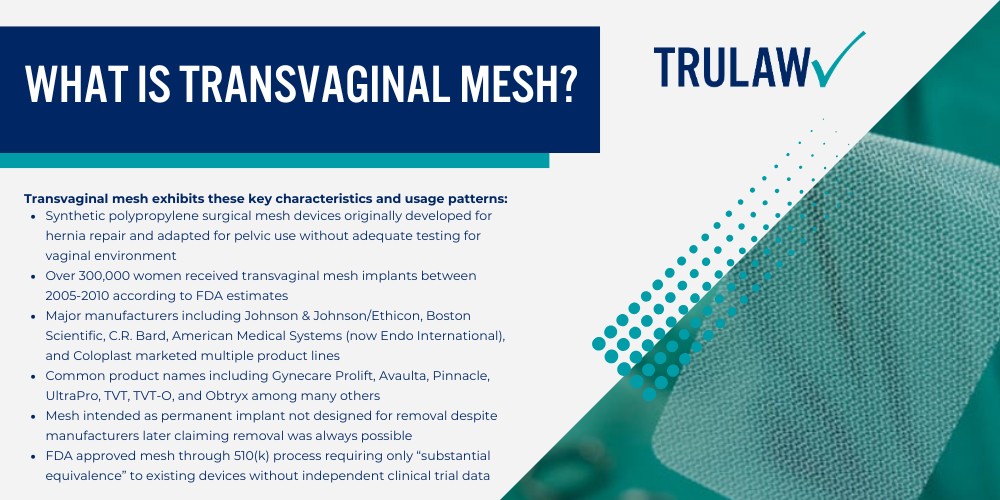
Transvaginal mesh exhibits these key characteristics and usage patterns:

  • Synthetic polypropylene surgical mesh devices originally developed for hernia repair and adapted for pelvic use without adequate testing for vaginal environment
  • Over 300,000 women received transvaginal mesh implants between 2005-2010 according to FDA estimates
  • Major manufacturers including Johnson & Johnson/Ethicon, Boston Scientific, C.R. Bard, American Medical Systems (now Endo International), and Coloplast marketed multiple product lines
  • Common product names including Gynecare Prolift, Avaulta, Pinnacle, UltraPro, TVT, TVT-O, and Obtryx among many others
  • Mesh intended as permanent implant not designed for removal despite manufacturers later claiming removal was always possible
  • FDA approved mesh through 510(k) process requiring only “substantial equivalence” to existing devices without independent clinical trial data

Mesh became standard treatment option by mid-2000s with manufacturers providing financial incentives to hospitals and training programs to surgeons, creating rapid adoption without long-term outcome data.

Many women were never informed mesh was synthetic permanent implant or told about alternative treatment options including traditional tissue repair, pelvic floor physical therapy, or pessary devices.

The FDA estimated 300,000 women received these implants between 2005-2010 alone, with complications appearing in 5-19% according to medical literature, though actual complication rates may be higher due to underreporting.

The Rise and Fall of Mesh Implants

Transvaginal mesh became popular in early 2000s as surgeons believed synthetic reinforcement offered better outcomes than traditional tissue repair which had 30-40% recurrence rates.

Manufacturers’ aggressive marketing campaigns emphasized ease of use through surgical mesh “kits” that standardized procedures, shorter surgical time compared to traditional repair, and marketing materials claiming mesh provided superior support preventing prolapse recurrence.

Medical device representatives attended surgeries providing hands-on guidance to surgeons, creating revenue streams and relationships that encouraged adoption.

Key milestones reveal the mesh device timeline:

  • 2002-2005: Multiple pelvic mesh products receive FDA 510(k) clearance for pelvic organ prolapse and stress urinary incontinence treatment without clinical trial requirements
  • 2005-2008: Peak mesh usage period with widespread adoption and aggressive marketing to OB-GYNs and urogynecologists as superior treatment option
  • 2008: FDA issues first safety communication noting rising adverse event reports but takes no regulatory action to restrict use
  • 2011: FDA issues second stronger safety communication stating serious complications are “not rare” and orders manufacturers to conduct post-market surveillance studies
  • 2013-2016: Major multidistrict litigations consolidate in federal courts as over 100,000 women file lawsuits against manufacturers
  • 2016: FDA reclassifies vaginal mesh devices from moderate-risk Class II to high-risk Class III requiring premarket approval demonstrating safety and effectiveness
  • 2019: FDA orders vaginal mesh manufacturers to stop selling mesh for pelvic organ prolapse (POP) after determining they could not demonstrate benefits outweighed risks

Problems surfaced as women reported complications within months or years after surgery including vaginal bleeding, chronic pain, mesh erosion through vaginal tissue, painful intercourse, and organ perforation.

The FDA received over 100,000 adverse event reports on transvaginal mesh devices between 2008-2018 documenting serious complications, though actual complication rates were higher because many cases went unreported or doctors failed to connect symptoms with mesh.

The 2019 FDA ban on mesh for pelvic organ prolapse represented vindication for women whose complaints were dismissed for years, confirming that synthetic mesh in vaginal environment created unacceptable risks that manufacturers downplayed or concealed.

Why Manufacturers Face Legal Accountability

Internal company documents obtained through litigation discovery revealed transvaginal mesh manufacturers knew about high complication rates as early as 2005-2009 but continued marketing products as safe and effective.

Specific evidence showed companies received adverse event reports, internal testing revealed mesh degradation and inflammatory responses, and executives discussed complication risks in emails and memos but failed to warn physicians or patients.

Whistleblower testimony and expert witness analysis demonstrated manufacturers prioritized profits over patient safety, choosing to continue selling defective products rather than conducting proper safety testing or issuing warnings.
Learning About Transvaginal Mesh and Why Lawsuits Exist; What Is Transvaginal Mesh; Why Manufacturers Face Legal Accountability

Legal proceedings uncovered these troubling patterns of corporate negligence:

  • Internal documents showing Johnson & Johnson executives knew about erosion rates as early as 2005 but continued aggressive marketing campaigns
  • Boston Scientific emails discussing whether to disclose complication data to FDA and deciding against full disclosure
  • C.R. Bard testing showing mesh degradation and inflammatory responses but releasing products without additional safety studies
  • Evidence that manufacturers used 510(k) process to avoid clinical trials by claiming equivalence to previously approved devices
  • Failure to warn patients and physicians about known risks including mesh erosion (5-19%), organ perforation (1-3%), chronic pain (up to 30%), and sexual dysfunction (20-40%)
  • Continued marketing after FDA safety communications warned about complications, demonstrating reckless disregard for patient safety
  • Marketing mesh for off-label uses beyond FDA-cleared indications without proper testing or approval

Over 100,000 lawsuits filed between 2010-2022 resulted in over $8 billion in settlements and jury verdicts, with major manufacturers including Johnson & Johnson/Ethicon paying the largest amounts across consolidated litigation.

Individual settlement amounts ranged from $60,000 to over $400,000 depending on injury severity, with some jury verdicts exceeding $25 million including punitive damages for egregious corporate misconduct.

TruLaw partners with transvaginal mesh litigation leaders who have decades of experience holding manufacturers accountable and recovering compensation for women injured by defective medical devices through both settlement negotiations and trial advocacy when necessary.

Please be advised that any projected or estimated settlement amounts mentioned on this page are general estimations and are not guaranteed.

These figures are based on opinions of legal experts based on the nature of the injuries and estimated costs of damages.

They are meant to provide a general idea of what settlement ranges could look like and should not be taken as definitive expectations for your case.

Contact TruLaw using the chat on this page to receive an instant case evaluation.
Common Complications and Injuries From Transvaginal Mesh

The devastating physical and emotional toll pelvic mesh complications have on women’s daily lives, intimate relationships, and mental health cannot be overstated.

Complications range from uncomfortable but treatable conditions to catastrophic injuries requiring multiple corrective surgeries and causing permanent disability.

While some women experience symptoms within weeks of surgery, others don’t develop complications until months or years later when mesh begins degrading or contracting, making it difficult to initially connect symptoms with mesh implants.

Learning About Transvaginal Mesh and Why Lawsuits Exist; What Is Transvaginal Mesh; Why Manufacturers Face Legal Accountability; Common Complications and Injuries From Transvaginal Mesh

Mesh Erosion and Exposure

Mesh erosion, also called mesh exposure or extrusion, occurs when synthetic material breaks through vaginal tissue and becomes visible or protrudes through the vaginal wall.

Medical literature reports mesh erosion rates between 5-19% for pelvic organ prolapse repairs and approximately 4-10% for mid urethral sling procedures, though some studies suggest actual rates may be higher in real-world practice versus controlled clinical trials.

Women with mesh erosion typically experience vaginal bleeding or spotting that may be intermittent or continuous, sharp pain during intercourse as protruding mesh scratches or irritates partner, foul-smelling discharge indicating possible infection, and visible or palpable rough material felt through vaginal tissue.

A 2024 University of Sheffield study found polypropylene mesh begins degrading within 60 days of implantation, with fibers becoming stiffer and showing signs of oxidation.

The concentration of polypropylene particles in surrounding tissue was over 10 times higher after 180 days than at 60 days, raising questions about the stability of mesh and its suitability for long-term implantation.

Mesh erosion often requires surgical revision to remove exposed material, but complete removal is frequently impossible because tissue has grown into mesh creating permanent attachment.

Women may require multiple surgeries as erosion recurs in different locations, with each surgery carrying additional risks and causing further tissue damage that makes future repairs more difficult.

Organ Perforation and Injury

Organ perforation represents one of the most serious mesh complications, occurring when mesh or surgical instruments used during placement puncture or penetrate adjacent organs.

Medical studies report perforation rates of 1-3% during surgery and additional cases discovered months or years later when eroding mesh migrates into organs.

Bladder perforation causes urinary urgency and frequency, recurrent urinary tract infections that don’t respond well to antibiotics, blood in urine (hematuria), and urine leaking into vagina creating fistula.

Bowel perforation leads to severe abdominal pain, changes in bowel habits including constipation or diarrhea, rectal bleeding, and fecal matter leaking through vagina in severe cases.

Some women have experienced mesh migration into pelvic blood vessels causing internal bleeding requiring emergency intervention.

Treatment typically requires major reconstructive surgery to remove mesh, repair damaged organs, and potentially create temporary ostomy to allow healing.

Women face extended recovery periods of several months, possible permanent organ dysfunction requiring ongoing medical management, and increased risk of complications from revision surgery including additional perforations, infections, and adhesions.

Chronic Pain and Nerve Damage

Chronic pain affects an estimated 14-30% of women with transvaginal mesh according to medical literature, though patient advocacy groups suggest actual rates are much higher.

Pain can manifest immediately after surgery or develop gradually as mesh contracts, erodes, or causes inflammation over months or years.

Chronic pelvic pain appears as constant dull aching or sharp stabbing sensations in lower abdomen, pelvis, or vagina that worsens with movement, sitting, or physical activity.

Groin and leg pain radiates from pelvis down inner thighs when mesh or sutures damage obturator nerve or other pelvic nerves.

Low back pain develops as women alter posture and movement patterns to avoid triggering pelvic pain, creating secondary musculoskeletal problems.

Nerve damage from mesh placement or removal causes burning sensations, tingling, or numbness in genital area, inner thighs, or legs.

Women describe feeling like sitting on broken glass or having constant electric shocks in pelvic region.

Mesh pain management often requires multiple approaches including oral medications, nerve blocks, pelvic floor physical therapy, and sometimes repeat surgery, with many women never achieving complete relief.

Sexual Dysfunction and Dyspareunia

Sexual dysfunction, particularly dyspareunia (painful sexual intercourse), affects 20-40% of women with mesh complications according to medical studies.

Pain during sex can be so severe that women completely avoid intimate contact, causing relationship strain and emotional distress.

Dyspareunia presents as sharp stabbing pain during penetration caused by eroding mesh scratching vaginal tissue or partner’s anatomy, deep pelvic pain during thrusting as mesh contracts and pulls on surrounding structures, and pain persisting hours or days after intercourse due to inflammation or tissue trauma.

Vaginal stenosis (narrowing and scarring) from mesh erosion or multiple revision surgeries makes intercourse difficult or impossible in severe cases.

Many women report loss of sexual desire as conditioned response to pain, feeling defective or damaged affecting self-esteem and body image, and guilt about inability to maintain intimate relationship with partner.

Partners may experience injury from exposed mesh including penile cuts or abrasions requiring medical attention.

The psychological impact extends beyond physical pain, with women describing feelings of being “broken” or “no longer a whole woman.”

Urinary Problems and Incontinence

Urinary complications affect women regardless of whether mesh was placed to treat stress incontinence or pelvic organ prolapse.

New-onset urinary problems or worsening of pre-existing conditions occur in 10-20% of mesh recipients.

Urge incontinence involves sudden strong urge to urinate with inability to reach toilet in time, occurring even when bladder isn’t full.

Urinary retention means difficulty emptying bladder completely requiring self-catheterization or permanent catheter in severe cases.

Recurrent urinary tract infections become chronic problem due to incomplete bladder emptying or mesh erosion into urinary tract providing bacterial entry point.

Some women experience urethral obstruction where contracted mesh compresses urethra preventing normal urination.

Women report needing to urinate 15-20 times daily including multiple times overnight, disrupting sleep and daily activities.

Many avoid leaving home for extended periods due to fear of incontinence episodes or inability to access bathrooms frequently.

Chronic UTIs require repeated courses of antibiotics leading to antibiotic resistance and additional health problems.

If you or someone you love experienced chronic pain, mesh erosion, or sexual dysfunction after transvaginal mesh implantation, you may be eligible to seek compensation.

Contact TruLaw using the chat on this page to receive an instant case evaluation that can help you determine if you qualify to file a transvaginal mesh lawsuit today.

Who Qualifies for a Transvaginal Mesh Lawsuit in 2025

Women continue filing new vaginal mesh lawsuits in 2025 despite closure of federal multidistrict litigation, as state courts accept individual cases and statutes of limitations allow claims when complications appear years after surgery.

Learning About Transvaginal Mesh and Why Lawsuits Exist; What Is Transvaginal Mesh; Why Manufacturers Face Legal Accountability; Common Complications and Injuries From Transvaginal Mesh; Who Qualifies for a Transvaginal Mesh Lawsuit in 2025

Knowing eligibility requirements helps women determine whether they have valid legal claims against manufacturers.

Implant Timeline and Device Type

Women who received transvaginal mesh implants between approximately 1998 and 2019 may qualify for legal action.

The FDA banned mesh for pelvic organ prolapse in April 2019, but mesh slings for stress urinary incontinence (SUI) remain on market under restricted conditions.

Women implanted after 2019 with a bladder sling experiencing complications may still have valid claims.

Qualifying mesh products include those manufactured by Johnson & Johnson/Ethicon (Gynecare Prolift, TVT, TVT-Secur, TVT-O, Prosima, Gynemesh), Boston Scientific (Obtryx, Pinnacle, Advantage Fit, Uphold LITE, Xenform), C.R. Bard (Avaulta, Align, Ventralex), American Medical Systems/Endo (Apogee, Perigee, Elevate, Sparc), Coloplast (Aris, Altis, Novasilk), and other manufacturers’ products.

Even women unsure of specific mesh brand or manufacturer can pursue claims if medical records document mesh implantation and subsequent complications.

The type of procedure matters less than presence of synthetic mesh material.

Women who had mesh placed for anterior prolapse (cystocele), posterior prolapse (rectocele), apical prolapse (uterine or vault prolapse), or stress urinary incontinence all potentially qualify.

Some women received combination procedures addressing multiple conditions simultaneously.

Complication Severity and Medical Documentation

Valid legal claims require documented complications directly linked to mesh implantation.

Medical records should show mesh-related problems including erosion confirmed by physical examination, organ perforation documented through imaging or surgical findings, chronic pain that developed or worsened after mesh surgery, new-onset urinary problems or worsening incontinence, sexual dysfunction or dyspareunia not present before surgery, or infections requiring antibiotic treatment or surgical intervention.

Severity matters when determining pelvic mesh case value, though even moderate complications may warrant legal action.

Women who required revision surgery to remove or repair mesh have stronger claims demonstrating objective harm.

Those living with ongoing pain, dysfunction, or lifestyle limitations also have valid claims even without revision surgery if conservative treatments failed.

Medical documentation strengthens cases substantially.

Women should maintain complete records including pre-operative assessments showing original diagnosis and treatment plan, operative reports detailing mesh product used and placement technique, post-operative visit notes documenting complaints and complications, imaging studies (ultrasound, CT, MRI) showing mesh position or problems, and records from any revision surgeries or treatments for complications.

Statute of Limitations Considerations

Statutes of limitations create deadlines for filing lawsuits that vary by state, typically ranging from 1-4 years.

The clock generally starts when woman discovered or reasonably should have discovered that mesh caused her injuries, not necessarily when surgery occurred.

This “discovery rule” helps women whose complications appeared years after implantation.

For example, a woman who had mesh placed in 2010 but didn’t experience erosion symptoms until 2022 likely has valid claim if she files within her state’s statute period after discovering the problem.

However, waiting too long after discovering complications can jeopardize claims.

Women experiencing any mesh-related symptoms should consult attorneys immediately to preserve legal rights.

Some states allow statute extension for fraudulent concealment, meaning manufacturers’ deliberate hiding of known risks may extend filing deadlines.

However, relying on such exceptions is risky, making prompt legal consultation after discovering complications the safest approach.

Financial and Treatment Circumstances

Women need not have already undergone revision surgery to file claims, though those who have typically receive higher settlements due to documented medical expenses and surgical complications.

Women currently experiencing symptoms without yet having revision surgery can still pursue legal action, as compensation can cover future anticipated medical costs including planned revision procedures.

Financial circumstances don’t prevent filing lawsuits.

Most attorneys handling pelvic mesh claims work on contingency fee basis, meaning no upfront costs or fees unless compensation is recovered.

Legal expenses including expert witnesses, medical record retrieval, and filing fees are typically advanced by law firm and reimbursed from settlement or verdict proceeds.

Women without ability to pay hourly legal fees can still access experienced attorneys through contingency arrangements.

Insurance status doesn’t affect eligibility.

Women with private insurance, Medicare, Medicaid, or no insurance coverage all may file mesh lawsuits.

However, insurance companies or government programs that paid for mesh surgeries or revision procedures may have subrogation rights to recover their costs from settlements, though attorneys negotiate these amounts to optimize client recovery.

If you or a loved one suffered complications after transvaginal mesh surgery, you may be eligible to seek compensation even if symptoms appeared years after implantation.

Contact TruLaw using the chat on this page to receive an instant case evaluation that can help you determine if you qualify to join others in filing a transvaginal mesh lawsuit today.

Recognizing Settlement Amounts and Compensation

Transvaginal mesh settlements reflect both the serious nature of injuries women suffered and manufacturers’ liability for selling defective products without adequate warnings.

Learning About Transvaginal Mesh and Why Lawsuits Exist; What Is Transvaginal Mesh; Why Manufacturers Face Legal Accountability; Common Complications and Injuries From Transvaginal Mesh; Who Qualifies for a Transvaginal Mesh Lawsuit in 2025; Recognizing Settlement Amounts and Compensation

While every case is unique based on individual circumstances, knowing typical settlement ranges and factors affecting compensation helps set realistic expectations.

Settlement Range Overview

Lawyers estimate average transvaginal mesh settlement amounts range from approximately $60,000 to over $400,000 depending on case-specific factors.

However, these figures represent general projections based on past results and actual settlement amounts can fall above or below this range.

Individual settlements remain confidential in most cases through non-disclosure agreements, making precise averages difficult to determine.

Major jury verdicts have exceeded these settlement ranges substantially.

Notable verdicts include $120 million awarded to Susan McFarland in 2019 for TVT-O mesh complications, $80 million to Patricia Mesigian in 2019 for Prolift mesh injuries, $100 million to Deborah Barba in 2015 against Boston Scientific (later reduced to $10 million on appeal), and $34.5 million to Martha and Felix Salazar for Obtryx mesh complications.

These large verdicts typically included substantial punitive damages intended to punish manufacturers for egregious misconduct.

Global settlement amounts paid by manufacturers demonstrate litigation’s overall scope.

American Medical Systems set aside over $2.6 billion to resolve tens of thousands of vaginal mesh claims.

Vaginal mesh makers like Johnson & Johnson/Ethicon have paid billions across multiple settlements and individual verdicts.

Boston Scientific paid $189 million to settle deceptive marketing claims with 47 states and approximately $119 million to resolve 3,000 individual cases.

C.R. Bard settled thousands of cases for hundreds of millions in total payments.

Please be advised that any projected or estimated settlement amounts mentioned on this page are general estimations and are not guaranteed.

These figures are based on opinions of legal experts based on the nature of the injuries and estimated costs of damages.

They are meant to provide a general idea of what settlement ranges could look like and should not be taken as definitive expectations for your case.

Contact TruLaw using the chat on this page to receive an instant case evaluation.
Factors Affecting Settlement Value

Injury severity represents the most important factor in determining settlement value.

Women requiring multiple revision surgeries with poor outcomes receive higher compensation than those with minor complications successfully treated conservatively.

Permanent disabilities including chronic pain, sexual dysfunction, or urinary problems that cannot be fully corrected increase settlement amounts.

Medical expenses both past and future substantially impact compensation.

Past costs include emergency care for acute complications, revision surgeries to remove or repair mesh, hospitalizations and recovery expenses, medications and pain management, physical therapy and rehabilitation, and psychiatric care for emotional trauma.

Future costs encompass anticipated revision surgeries, ongoing pain management, potential additional complications requiring treatment, and permanent disability accommodations.

Impact on quality of life affects both economic and non-economic damages.

Women who cannot work due to chronic pain receive compensation for lost wages and diminished earning capacity.

Those unable to perform household duties, care for children, or maintain normal activities receive compensation for lost quality of life.

Sexual dysfunction destroying intimate relationships receives compensation for emotional suffering and relationship damage.

Age and life expectancy influence settlement calculations since younger women face decades living with complications and requiring ongoing medical care.

Pre-existing conditions may reduce settlement amounts if defendants argue prior health issues contributed to complications independent of mesh.

However, manufacturers remain liable even when pre-existing conditions existed if mesh worsened those conditions or created new problems.

Economic vs.Non-Economic Damages

Economic damages compensate for quantifiable financial losses including past medical bills with supporting documentation, future medical care estimated by medical experts, lost wages from missed work during treatment, reduced earning capacity if unable to return to previous employment, and out-of-pocket costs for travel to medical appointments, home modifications, or medical equipment.

Non-economic damages compensate for intangible losses difficult to quantify financially.

Pain and suffering accounts for physical pain experienced since mesh complications developed and ongoing chronic pain requiring daily management.

Mental anguish includes anxiety, depression, PTSD, or other emotional problems developing from mesh complications.

Loss of consortium covers damage to marital relationship including loss of companionship, affection, and sexual relations.

Loss of enjoyment of life compensates for inability to participate in previously enjoyed activities, hobbies, or social interactions.

Punitive damages may be awarded in cases demonstrating particularly egregious corporate misconduct.

These damages punish manufacturers for knowingly selling defective products, concealing known risks from patients and physicians, prioritizing profits over patient safety, and continuing sales after learning of serious complications.

Punitive damages often exceed compensatory damages in mesh cases where internal documents reveal corporate knowledge of problems and deliberate decisions to hide information.

Settlement Timeline and Process

Settlement negotiations typically begin after sufficient medical treatment and documentation establish injury extent.

Lawyers advise waiting until complications are fully diagnosed and treatment plan is established before settling to ensure compensation covers all future needs.

Rushing to settle while still undergoing treatment may result in accepting inadequate amounts that don’t cover eventual costs.

The settlement process generally follows this timeline: initial case evaluation and attorney engagement (1-2 months), medical record collection and review (2-3 months), filing lawsuit and service on defendants (1-2 months), discovery phase exchanging information (6-12 months), expert witness reports and depositions (3-6 months), mediation or settlement negotiations (2-6 months), and settlement agreement and payment (1-3 months).

Total timeline from filing a vaginal mesh case to settlement typically ranges from 18-36 months depending on intricacy and negotiations.

Some cases proceed to trial when settlement offers are inadequate or manufacturers refuse reasonable settlements.

Trial preparation adds time but may result in considerably higher compensation if jury awards substantial verdict.

However, trials carry risk that juries could award less than settlement offers or find in favor of defendants, making careful evaluation of settlement offers important.

If you or a loved one has suffered severe complications from transvaginal mesh implants, you may be eligible to seek compensation for medical expenses, pain and suffering, and lost quality of life.

Contact TruLaw using the chat on this page to receive an instant case evaluation that can help you determine if you qualify to file a transvaginal mesh lawsuit today.

Legal Claims in Transvaginal Mesh Cases

Transvaginal mesh lawsuits assert multiple legal theories holding manufacturers accountable for injuries caused by defective pelvic mesh.

Knowing the legal basis for claims helps women recognize how attorneys build cases against manufacturers.

Learning About Transvaginal Mesh and Why Lawsuits Exist; What Is Transvaginal Mesh; Why Manufacturers Face Legal Accountability; Common Complications and Injuries From Transvaginal Mesh; Who Qualifies for a Transvaginal Mesh Lawsuit in 2025; Recognizing Settlement Amounts and Compensation; Legal Claims in Transvaginal Mesh Cases (2)

Design Defect Claims

Design defect claims argue that mesh products were unreasonably dangerous as designed, regardless of manufacturing quality.

Polypropylene mesh’s fundamental design for use in vaginal environment caused foreseeable harm that alternative designs could have prevented or reduced.

Expert testimony demonstrates that mesh material, weave pattern, or fixation method created inherent risks of erosion, contraction, or inflammation.

Manufacturers’ use of hernia repair mesh design for pelvic applications without adequate testing for vaginal environment supports design defect claims.

The University of Sheffield’s 2024 research showing polypropylene mesh degrades within 60 days of pelvic implantation while manufacturers claimed material was inert and permanent provides powerful evidence of design deficiency.

Alternative materials or native tissue repair methods existed that could have provided treatment without creating risks of synthetic mesh.

Risk-benefit analysis shows mesh’s risks outweighed benefits, supporting design defect claims.

The FDA’s 2019 determination that manufacturers failed to demonstrate mesh for pelvic organ prolapse provided reasonable assurance of safety and effectiveness validated women’s claims that products were inherently defective from conception.

Manufacturing Defect Claims

Manufacturing defect claims allege specific mesh units departed from intended design specifications due to production errors.

Women with mesh showing premature degradation, contamination, or structural defects inconsistent with product specifications may have manufacturing defect claims independent of design issues.

Quality control failures at manufacturing facilities resulted in mesh products with inconsistent material properties, improper sterilization, or contamination.

Internal company documents sometimes reveal knowledge of manufacturing problems that weren’t disclosed to FDA or medical community.

Expert analysis of explanted mesh showing manufacturing defects different from typical complications supports these claims.

Failure to Warn Claims

Failure to warn claims argue manufacturers knew or should have known about mesh risks but failed to provide adequate warnings to patients and physicians.

Internal company documents showing awareness of high complication rates without corresponding warnings prove manufacturers breached duty to disclose known risks.

Adequate warnings require disclosure of complication rates based on clinical data, alternative treatment options including traditional tissue repair, and information allowing informed decision-making about accepting mesh risks versus pursuing other treatments.

Many women never received informed consent explaining their vaginal mesh implant was permanent synthetic material or that complications could require multiple revision surgeries without guarantee of successful removal.

Manufacturers’ marketing materials emphasizing benefits while minimizing risks violated duty to provide balanced information.

Some companies’ advertisements implied vaginal mesh products were safe and effective without adequately disclosing serious complication risks.

Failure to update warnings as new safety information emerged through adverse event reports or post-market studies supports liability.

Negligence and Fraud Claims

Negligence claims assert manufacturers breached duty of care owed to patients by failing to conduct adequate pre-market testing, not monitoring post-market safety data, marketing products for off-label uses without proper studies, and not implementing corrective actions when problems were identified.

Reasonable manufacturer would have conducted long-term safety studies before widespread marketing and would have restricted use or recalled products when serious complications emerged.

Fraud or intentional misrepresentation claims arise when internal documents show manufacturers knowingly made false statements about safety or effectiveness.

Conspiracy to defraud claims allege manufacturers collaborated to minimize safety concerns, shared adverse event data without public disclosure, or engaged in coordinated efforts to influence medical opinions through paid consultants while hiding financial relationships.

Breach of Warranty Claims

Breach of warranty claims arise when products fail to perform as manufacturers represented either explicitly or implicitly.

Express warranties created through advertising or sales materials promising specific safety or effectiveness outcomes that weren’t delivered create liability.

Implied warranties of merchantability guarantee products are fit for their intended use, which defective mesh failing to safely treat conditions without causing worse harm breaches.

Implied warranties of fitness for particular purpose apply when manufacturers knew women relied on mesh for specific medical treatment and products were unsuitable for that purpose.

Women purchasing mesh based on manufacturer representations about safety have breach of warranty claims when products caused serious complications contradicting those representations.

Legal Standards and Burden of Proof

Product liability cases typically require proving: (1) defendant designed, manufactured, or sold the product, (2) product was defective when it left manufacturer’s control, (3) defect existed when product was used as intended, (4) defect directly caused plaintiff’s injuries, and (5) plaintiff suffered damages as result of defect.

Strict liability applies in many states, meaning manufacturers are liable for defective products regardless of how much care they exercised during design or manufacturing.

This standard helps injured women since they need not prove manufacturer was negligent, only that product was defective and caused harm.

Burden of proof in civil cases requires proving claims by “preponderance of evidence” meaning more likely than not (greater than 50% probability).

This standard is lower than criminal cases’ “beyond reasonable doubt” requirement, making it easier to establish liability based on available evidence.

If you or someone you love suffered injuries from defective transvaginal mesh products, you may be eligible to seek compensation for manufacturer negligence, design defects, and failure to warn.

Contact TruLaw using the chat on this page to receive an instant case evaluation that can help you determine if you qualify to join others in filing a transvaginal mesh lawsuit today.

Steps to Take if You Have Mesh Complications

Women experiencing transvaginal mesh complications should take specific actions to protect their health and legal rights.

Early intervention improves medical outcomes and preserves evidence needed for potential lawsuits.

Learning About Transvaginal Mesh and Why Lawsuits Exist; What Is Transvaginal Mesh; Why Manufacturers Face Legal Accountability; Common Complications and Injuries From Transvaginal Mesh; Who Qualifies for a Transvaginal Mesh Lawsuit in 2025; Recognizing Settlement Amounts and Compensation; Legal Claims in Transvaginal Mesh Cases (2); Steps to Take if You Have Mesh Complications

Seek Medical Evaluation and Documentation

Women experiencing symptoms possibly related to mesh should seek evaluation from healthcare provider experienced with mesh complications.

Symptoms warranting immediate attention include vaginal bleeding or discharge, pelvic or abdominal pain, painful intercourse, urinary problems, or feeling mesh through vaginal tissue.

Some urogynecologists and pelvic floor specialists have expertise diagnosing and treating mesh complications.

Medical evaluation should include detailed history documenting when symptoms began, how symptoms progressed, what treatments were attempted, and how complications affect daily life.

Physical examination checking for visible mesh erosion, pelvic tenderness, or tissue scarring should be documented.

Diagnostic testing may include pelvic ultrasound to visualize mesh position, cystoscopy examining bladder for erosion or perforation, and pelvic MRI showing detailed mesh location and tissue changes in challenging cases.

Complete medical records from original mesh surgery including operative report with mesh product name and lot number, implanting surgeon’s name and contact information, and pre-operative evaluation and informed consent documents should be requested.

Follow-up care records including all visits, treatments, medications prescribed, and specialist consultations should be maintained.

Documentation from any revision surgeries or emergency room visits related to complications strengthens legal claims.

Understand Treatment Options

Conservative treatment options for mesh complications include estrogen cream to thicken vaginal tissue around small erosions, antibiotics for infections, pain medications for symptom management, and pelvic floor physical therapy for pain and dysfunction.

Conservative measures work for minor complications but rarely resolve serious erosion, perforation, or chronic pain problems.

Surgical revision for mesh removal involves partial removal where accessible mesh causing problems is excised while deeply embedded portions are left, or total removal attempting to excise all mesh though this is frequently impossible due to tissue integration.

Revision surgery risks include additional organ damage during mesh removal, worsening pelvic floor support after mesh removal, recurrence of original prolapse or incontinence, and persistent pain even after mesh removal.

Surgeons experienced in mesh removal achieve better outcomes than those without specialized training.

Women should seek surgeons who routinely perform mesh removal procedures, understand different mesh products and placement techniques, can handle complications during removal, and honestly discuss realistic expectations about complete removal, symptom resolution, and sexual intercourse recurrence.

Some women require multiple revision surgeries as complications persist or recur.

Consult Legal Representation

Women should consult a vaginal mesh lawyer as soon as complications are diagnosed to understand legal options and preserve rights.

Most mesh attorneys offer free initial consultations to evaluate potential claims without financial obligation.

Consultations typically cover whether complications qualify for legal action, estimated settlement value range, likely timeline for resolution, and attorney’s experience and track record.

Choosing the right attorney for your pelvic mesh lawsuit requires considering experience specifically with mesh cases, resources to handle intricate medical device litigation, track record of settlements and verdicts, and clear communication about legal process and expectations.

Many attorneys handle mesh cases on contingency fee basis, charging percentage of settlement or verdict (typically 33-40%) only if compensation is recovered.

This arrangement allows women to pursue justice without upfront legal costs.

During consultation, women should bring medical records documenting mesh implant and complications, list of symptoms and treatments, information about financial losses from medical bills and lost work, and questions about legal process and potential outcomes.

Honest discussion of complications’ impact on daily life helps attorneys evaluate claim strength and potential value.

Preserve Evidence and Documentation

Women should maintain organized records of all medical care related to mesh including original surgery records, complication diagnosis and treatment, revision surgeries, and ongoing care.

Financial documentation should cover medical bills and statements, insurance explanation of benefits, out-of-pocket expenses, and lost wage documentation.

Personal impact evidence includes journal documenting daily symptoms and limitations, photographs of visible complications or scarring, and written statement of how complications affected relationships, work, and quality of life.

Explanted mesh should be preserved if possible, as laboratory analysis can identify product defects or premature degradation supporting legal claims.

Attorneys can arrange expert analysis comparing explanted mesh to unused products to document changes occurring after implantation.

Avoiding social media discussions of case details protects legal strategy since defense attorneys monitor plaintiffs’ social media for information contradicting injury claims.

Comments minimizing symptoms, photos showing activities inconsistent with claimed limitations, or discussing case details can harm settlement negotiations or trial presentation.

Take Action While Statutes Allow

Statutes of limitations create deadlines for filing lawsuits that women cannot extend once expired.

Even women still considering whether to pursue legal action should consult attorneys to understand filing deadlines, as waiting too long eliminates options regardless of injury severity.

Some states have statutes as short as one year from discovering complications, making immediate consultation important.

Women unsure whether complications warrant legal action should still seek evaluation, as attorneys can assess whether medical evidence supports claims and whether settlement amounts would justify pursuing litigation.

Minor complications may not warrant lawsuits, but moderate to severe problems affecting daily life likely qualify for compensation.

If you or a loved one is experiencing symptoms that may be related to transvaginal mesh complications, you may be eligible to seek compensation for your injuries and suffering.

Contact TruLaw using the chat on this page to receive an instant case evaluation that can help you determine if you qualify to file a transvaginal mesh lawsuit today.

How Can A Transvaginal Mesh Attorney from TruLaw Help You?

Our Transvaginal Mesh attorney at TruLaw is dedicated to supporting clients through the process of filing a Transvaginal Mesh lawsuit.

With extensive experience in product liability cases, Jessica Paluch-Hoerman and our partner law firms work with litigation leaders and medical experts to prove how defective mesh implants caused you harm.

Learning About Transvaginal Mesh and Why Lawsuits Exist; What Is Transvaginal Mesh; Why Manufacturers Face Legal Accountability; Common Complications and Injuries From Transvaginal Mesh; Who Qualifies for a Transvaginal Mesh Lawsuit in 2025; Recognizing Settlement Amounts and Compensation; Legal Claims in Transvaginal Mesh Cases (2); Steps to Take if You Have Mesh Complications; How Can A Transvaginal Mesh Attorney from TruLaw Help You

TruLaw focuses on securing compensation for medical expenses, revision surgeries, pain and suffering, lost income, and other damages resulting from your vaginal mesh injuries.

We understand the physical and emotional toll that Transvaginal Mesh complications have on your life and provide the personalized guidance you need when seeking justice.

Meet the Lead Transvaginal Mesh Attorney at TruLaw

Learning About Transvaginal Mesh and Why Lawsuits Exist; What Is Transvaginal Mesh; Why Manufacturers Face Legal Accountability; Common Complications and Injuries From Transvaginal Mesh; Who Qualifies for a Transvaginal Mesh Lawsuit in 2025; Recognizing Settlement Amounts and Compensation; Legal Claims in Transvaginal Mesh Cases (2); Steps to Take if You Have Mesh Complications; How Can A Transvaginal Mesh Attorney from TruLaw Help You; Meet the Lead Online Gambling Addiction Attorney at TruLaw

Meet our lead Transvaginal Mesh attorney:

  • Jessica Paluch-Hoerman: As founder and managing attorney of TruLaw, Jessica brings her experience in product liability and personal injury to her client-centered approach by prioritizing open communication and personalized attention with her clients. Through TruLaw and partner law firms, Jessica has helped collect over $3 billion on behalf of injured individuals across all 50 states through verdicts and negotiated settlements.

How much does hiring a Transvaginal Mesh lawyer from TruLaw cost?

At TruLaw, we believe financial concerns should never stand in the way of justice.

That’s why we operate on a contingency fee basis – with this approach, you only pay legal fees after you’ve been awarded compensation for your injuries.

Learning About Transvaginal Mesh and Why Lawsuits Exist; What Is Transvaginal Mesh; Why Manufacturers Face Legal Accountability; Common Complications and Injuries From Transvaginal Mesh; Who Qualifies for a Transvaginal Mesh Lawsuit in 2025; Recognizing Settlement Amounts and Compensation; Legal Claims in Transvaginal Mesh Cases (2); Steps to Take if You Have Mesh Complications; How Can A Transvaginal Mesh Attorney from TruLaw Help You; Meet the Lead Online Gambling Addiction Attorney at TruLaw; How much does hiring a Transvaginal Mesh lawyer from TruLaw cost

If you or a loved one experienced pain, bleeding, infection, organ perforation, mesh erosion, or other complications from transvaginal mesh implants, you may be eligible to seek compensation.

Contact TruLaw using the chat on this page to receive an instant case evaluation and determine whether you qualify to join others in filing a Transvaginal Mesh lawsuit today.

TruLaw: Accepting Clients for the Transvaginal Mesh Lawsuit

Transvaginal mesh lawsuits are being filed by women across the country who suffered serious complications from pelvic mesh implants used to treat stress urinary incontinence and pelvic organ prolapse.

TruLaw is currently accepting clients for the Transvaginal Mesh lawsuit.

A few reasons to choose TruLaw for your Transvaginal Mesh lawsuit include:

  • If We Don’t Win, You Don’t Pay: The Transvaginal Mesh lawyers at TruLaw and our partner firms operate on a contingency fee basis, meaning we only get paid if you win.
  • Expertise: We have decades of experience handling product liability cases similar to the Transvaginal Mesh lawsuit.
  • Successful Track Record: TruLaw and our partner law firms have helped our clients recover billions of dollars in compensation through verdicts and negotiated settlements.

If you or a loved one suffered pain, infection, bleeding, organ damage, or other complications after receiving a transvaginal mesh implant, you may be eligible to seek compensation.

Contact TruLaw using the chat on this page to receive an instant case evaluation that can determine if you qualify for the Transvaginal Mesh lawsuit today.

Frequently Asked Questions

  • Vaginal mesh settlements typically range from $60,000 to over $400,000 depending on injury severity and medical expenses.

    Women requiring multiple revision surgeries with permanent complications generally receive higher compensation, while some jury verdicts have exceeded $25 million including punitive damages.

    Please be advised that any projected or estimated settlement amounts mentioned on this page are general estimations and are not guaranteed.

    These figures are based on opinions of legal experts based on the nature of the injuries and estimated costs of damages.

    They are meant to provide a general idea of what settlement ranges could look like and should not be taken as definitive expectations for your case.

    Contact TruLaw using the chat on this page to receive an instant case evaluation.

Published by:
Share
Picture of Jessica Paluch-Hoerman
Jessica Paluch-Hoerman

Attorney Jessica Paluch-Hoerman, founder of TruLaw, has over 28 years of experience as a personal injury and mass tort attorney, and previously worked as an international tax attorney at Deloitte. Jessie collaborates with attorneys nationwide — enabling her to share reliable, up-to-date legal information with our readers.

This article has been written and reviewed for legal accuracy and clarity by the team of writers and legal experts at TruLaw and is as accurate as possible. This content should not be taken as legal advice from an attorney. If you would like to learn more about our owner and experienced injury lawyer, Jessie Paluch, you can do so here.

TruLaw does everything possible to make sure the information in this article is up to date and accurate. If you need specific legal advice about your case, contact us by using the chat on the bottom of this page. This article should not be taken as advice from an attorney.

Additional Transvaginal Mesh Lawsuit resources on our website:
All
FAQs
Injuries & Conditions
Legal Help
Military
Other Resources
Settlements & Compensation
You can learn more about this topic by visiting any of our Transvaginal Mesh Lawsuit pages listed below:
#1 Transvaginal Mesh Attorney
American Medical Systems Vaginal Mesh Lawsuit
Bladder Sling Lawsuit Statute of Limitations
Boston Scientific Vaginal Mesh Lawsuit
Choosing the Right Transvaginal Mesh Lawyer
Common Vaginal Mesh Injuries Users Should Know
Common Vaginal Mesh Problems
Damages Linked to Vaginal Mesh Complications
Do I Qualify for a Vaginal Mesh Lawsuit?
Ethicon Vaginal Mesh Lawsuit
FAQ: Are Transvaginal Mesh and Vaginal Mesh the Same?
FAQ: Do I Need A Transvaginal Mesh Attorney To File a Case?
FAQ: What Are Common Transvaginal Mesh Complications?
FAQ: What Do Transvaginal Mesh Attorneys Do for My Case?
FAQ: What Does A Vaginal Mesh Attorney Do For Your Lawsuit?
FAQ: What is the Purpose of a Transvaginal Mesh Implant?
FAQ: What is Trans Vaginal Mesh Used For?
FAQ: What is Transvaginal Mesh Used For?
FAQ: What is Transvaginal Mesh?
How Are Vaginal Mesh Problems or Complications Diagnosed?
How Can Transvaginal Mesh Complications Impact Quality Of Life?
How Common Are Vaginal Mesh Complications?
How Is Transvaginal Mesh Removal Performed?
How to Determine If You Have a Valid Vaginal Mesh Lawsuit?
How to File a Transvaginal Mesh Lawsuit?
How to Hire the Best Transvaginal Mesh Lawyer for Your Case
How To Seek Compensation In A Transvaginal Mesh Lawsuit
Long-term Impact of Transvaginal Mesh Complications
Statute of Limitations for Transvaginal Mesh Lawsuits
Transvaginal Mesh Alternatives
Transvaginal Mesh Class Action Lawsuits Explained
Transvaginal Mesh Implants: What You Need To Know
Transvaginal Mesh Lawsuit
Transvaginal Mesh Lawsuits: Settlement Amounts & Payouts
Transvaginal Mesh Revision Surgery: What to Expect
Transvaginal Mesh Settlements: What You Should Know
Types of Transvaginal Mesh
Vaginal Mesh Lawsuit Update | Vaginal Mesh Problems
Vaginal Mesh Lawsuits: Vaginal Mesh Surgery Injuries
What Are The Challenges In Transvaginal Mesh Litigation?
What Are The Psychological Effects Of Transvaginal Mesh Surgery Complications?
What Are the Symptoms of Mesh Erosion?
What Are The Symptoms Of Transvaginal Mesh Complications?
What Can Be Used Instead of Mesh for Prolapse?
What to Know When Hiring a Transvaginal Mesh Lawyer
What Women Should Know About Transvaginal Mesh
Why Do Some Transvaginal Mesh Implant Devices Fail?
Why Is Vaginal Mesh Surgery Controversial?

Other Transvaginal Mesh Lawsuit Resources

All
FAQs
Injuries & Conditions
Legal Help
Military
Other Resources
Settlements & Compensation